There is a version of hosting where guests move politely from the entry to the sitting room, accept a drink, and stay there until dinner is announced. I have never seen it happen. People come in, they put their bag somewhere they should not, and they walk toward the heat and the noise, which is always the kitchen. Fighting that instinct is a waste of a good evening; the better move is to accept it and to build the room so it can hold eight people who are all standing up and all talking at once.
Give the counter a single job
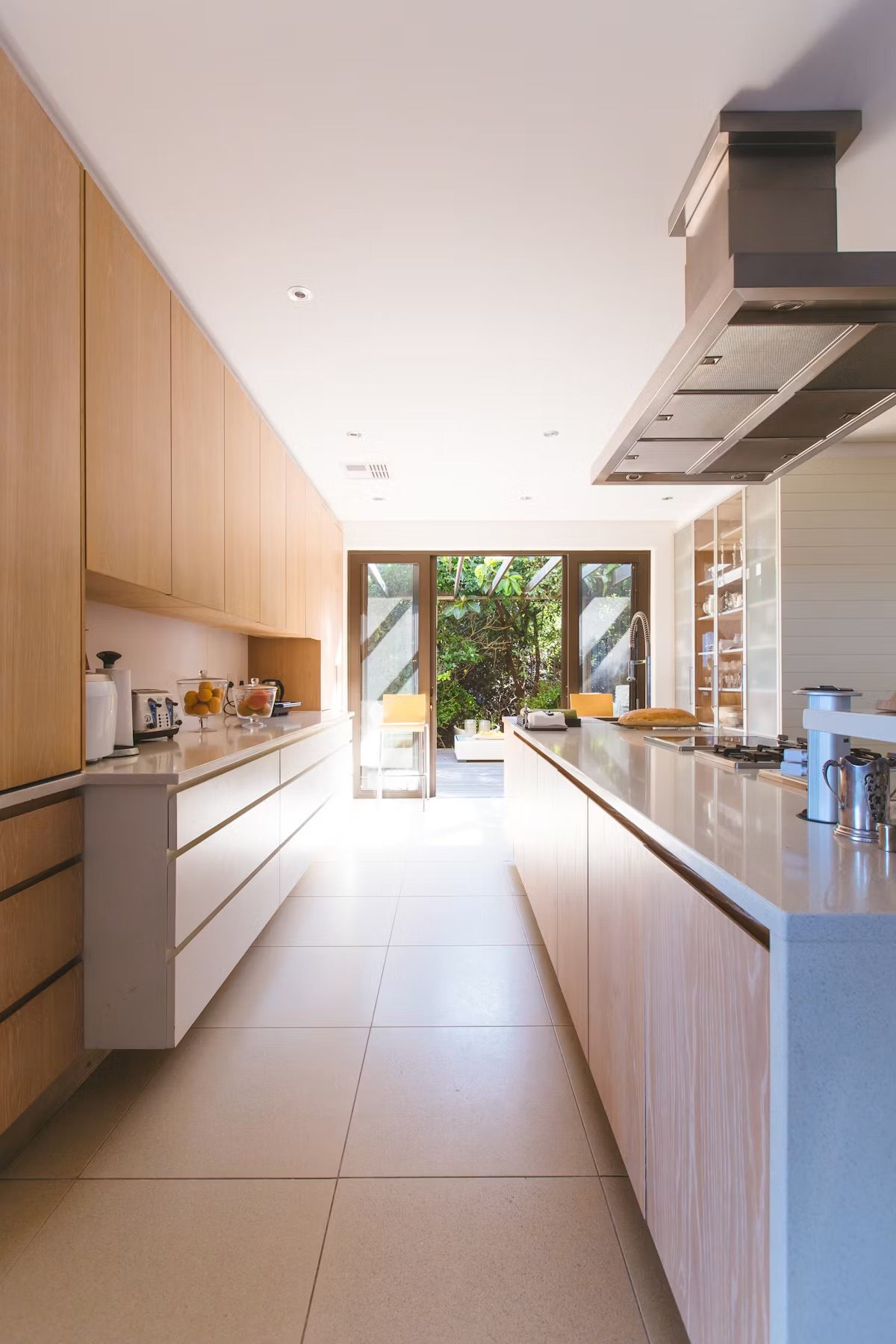
The failure in most kitchens is not square footage; it is that every surface is doing three things at the same time. Decide in advance which run is for cooking and which run is for standing, and then defend the difference. The cooking run holds the board, the salt, the oil, and the towel, and nothing else. The standing run holds the drinks, the ice, and one thing to eat with your hands. Guests will find the standing run within about ninety seconds and stay there, which keeps the stove clear for the person who has to use it.
Light it like a room, not like a work site
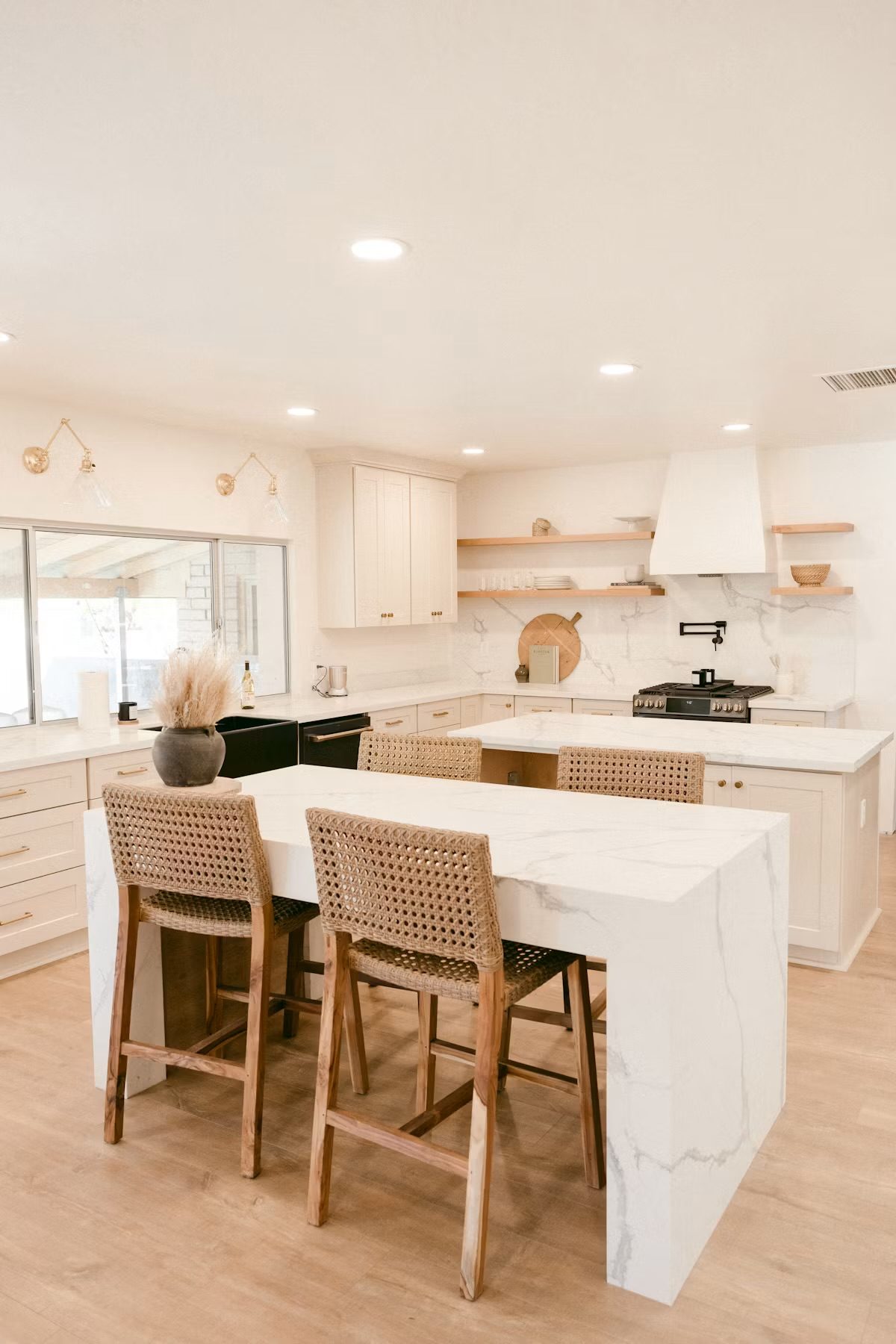
Recessed ceiling lights are honest and unflattering; they are correct for chopping and wrong for nine at night. Put every fixture in the kitchen on a dimmer, then add one light that sits at eye level: a small lamp at the end of the counter, a pendant hung lower than the showrooms recommend, or a pair of sconces if there is wall to spare. Turn the ceiling down and the low light up once the cooking is finished. The room stops reading as a kitchen and starts reading as the place everyone chose to be.
Let the pretty things be seen
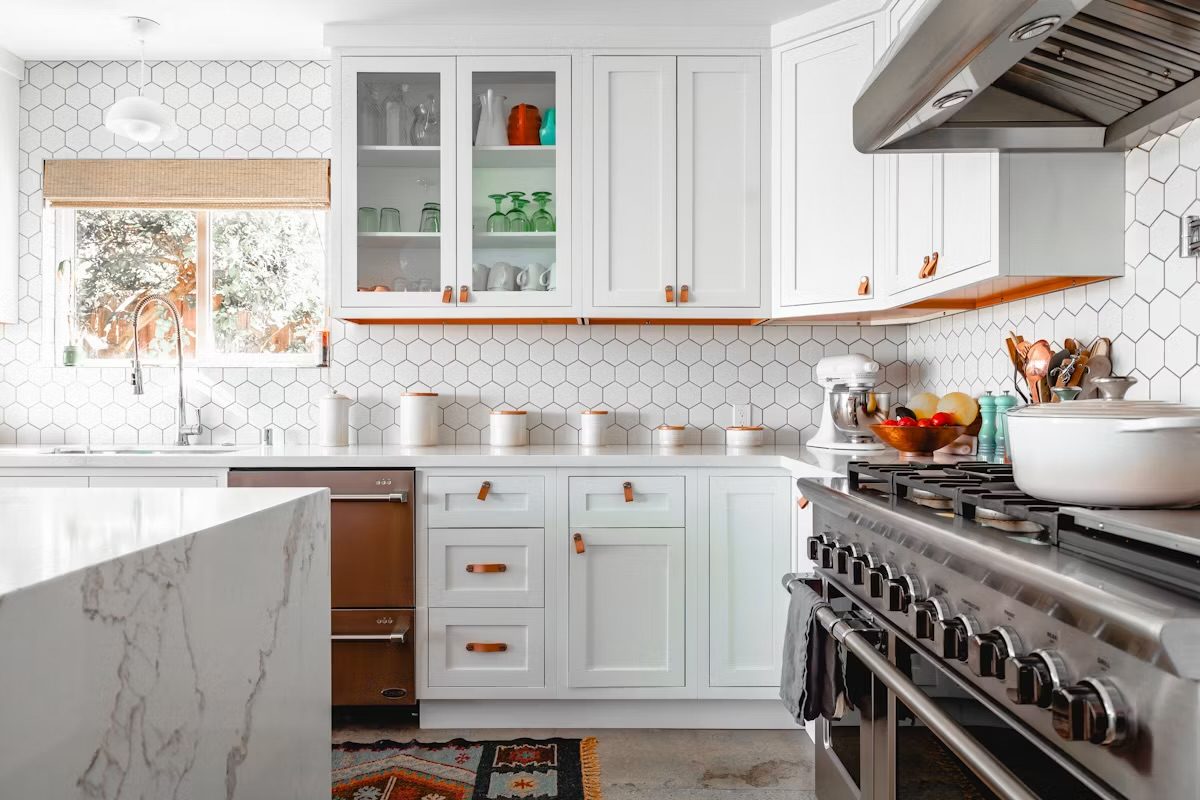
Glass-front cabinets and open shelving get treated as a storage decision when they are really an editing decision. If the glass is going to be there, what sits behind it has to earn the view: the coupes, the etched water glasses, the pitcher you actually use. Everything else, meaning the plastic lids and the three sizes of mixing bowl, goes behind a solid door. This is the least expensive way to make a standard kitchen look composed, and it costs an afternoon rather than a renovation.
A kitchen that photographs well and hosts badly is a set, not a room.
Leave one surface completely empty
Every kitchen needs a landing strip: a stretch of counter, usually near the door, that stays clear at all times. It absorbs the bag of ice, the bakery box, the bottle someone brought, and the phone that is playing music. Without it, those things land on the cooking run and the evening develops a low hum of irritation that nobody can name. With it, the room has a shock absorber, and you can wipe it down in ten seconds when the food comes out.
Move the drinks away from the stove
Traffic follows liquid. If the glasses, the ice, and the bottles are next to the range, the crowd will form exactly where the heat is, and the person cooking will spend the night saying excuse me. Put the drinks at the far end of the island or on a console outside the room entirely; the group splits in two, the doorway clears, and conversation happens in a loop instead of a bottleneck. This single change does more for a small kitchen than any amount of cabinetry.
Buy the second set of glasses
The reason people keep the good glassware in a high cabinet is fear of breakage, and the result is that it comes out four times a year. Buy an inexpensive second set in a shape you like, keep it at hand height, and use it on a Tuesday. Bubbles taste better in a proper glass, and the ritual of pouring into something with a stem changes an ordinary evening more reliably than the wine does. Anything that lives behind glass and never gets used is storage, not style.
The kitchens I return to are not the ones with the most expensive stone. They are the ones where the host can stay in the conversation, the drinks are three steps from the door, and there is a clear place to put down whatever you carried in. Design for the crowd you actually get, and the room will do the work of the evening for you.