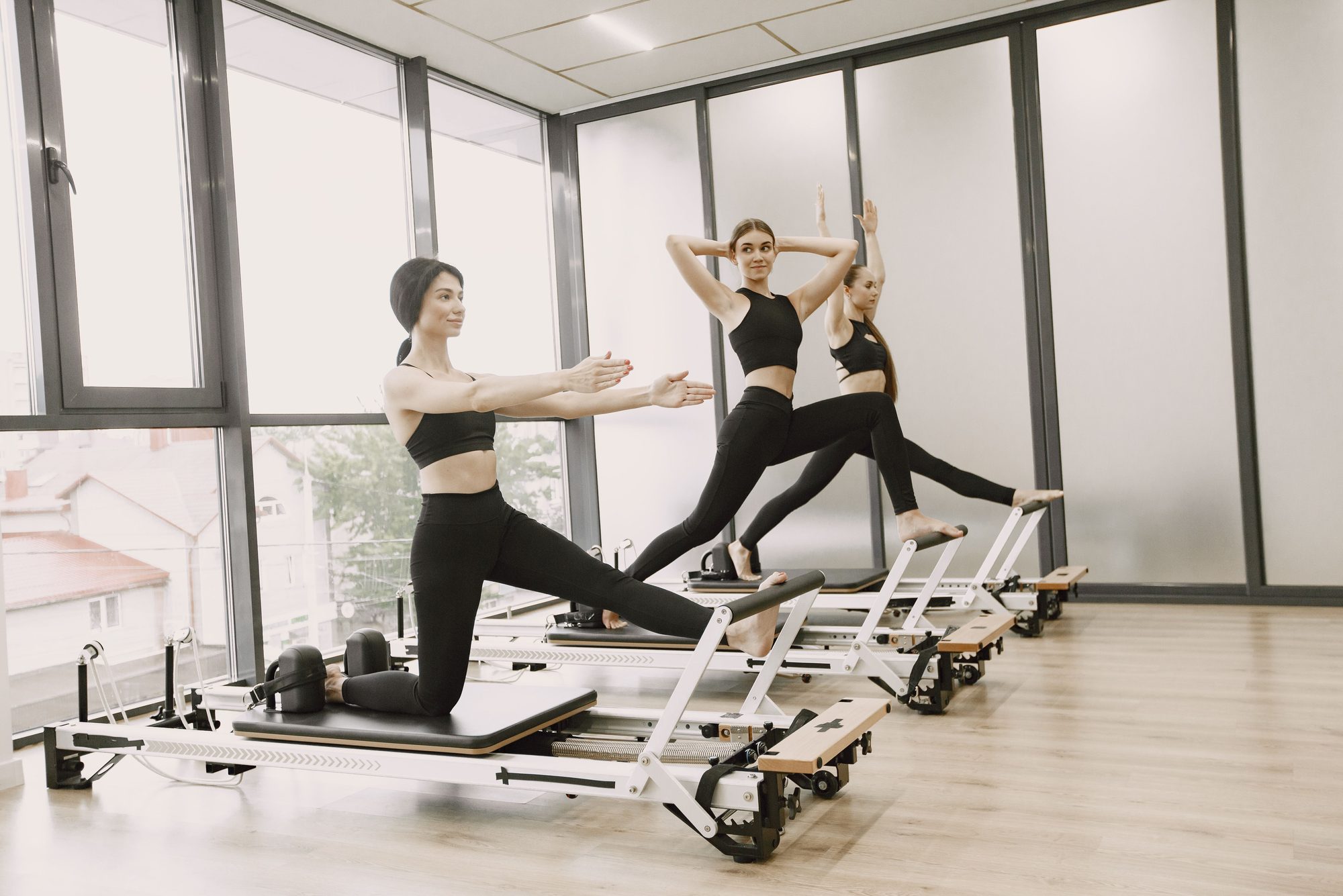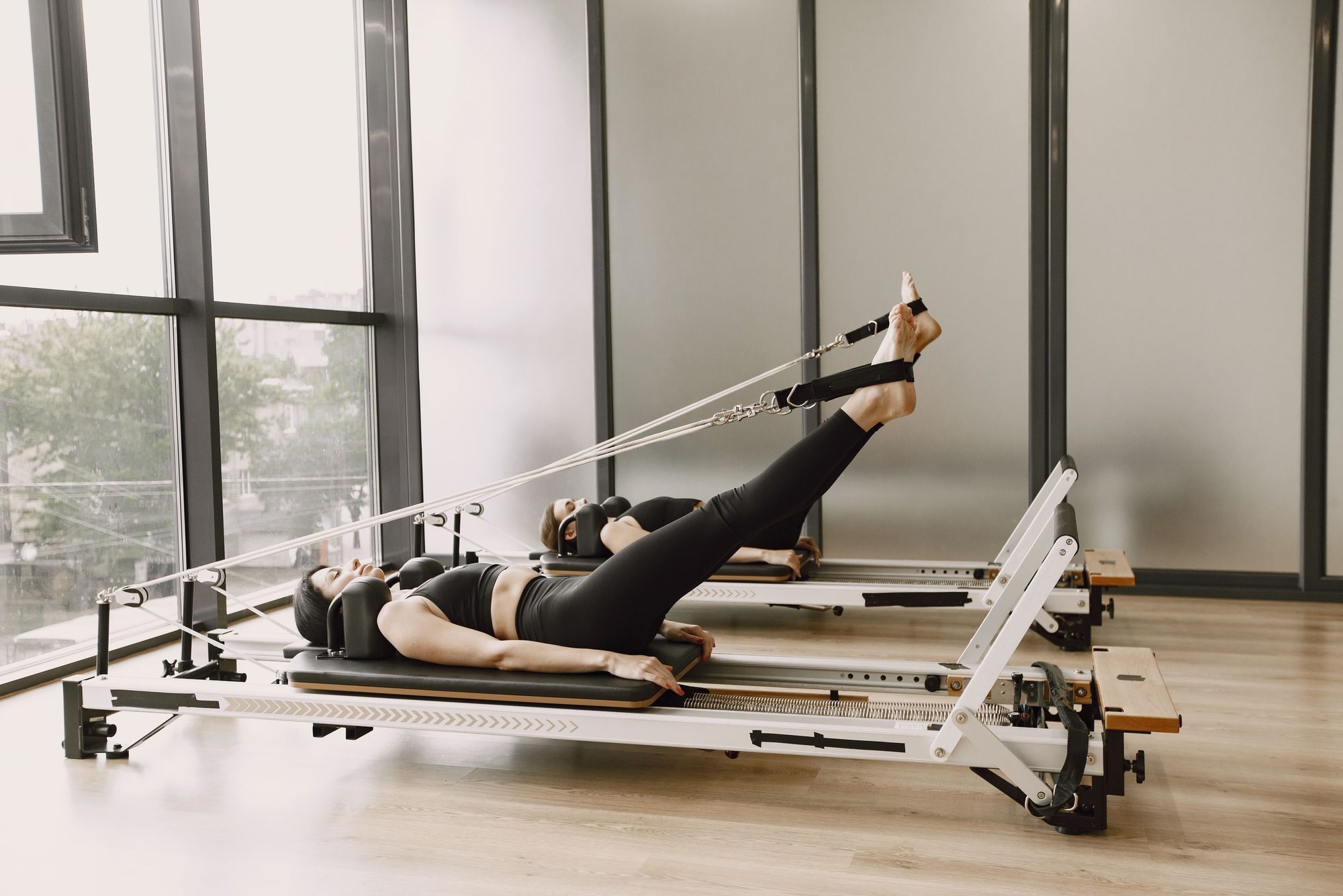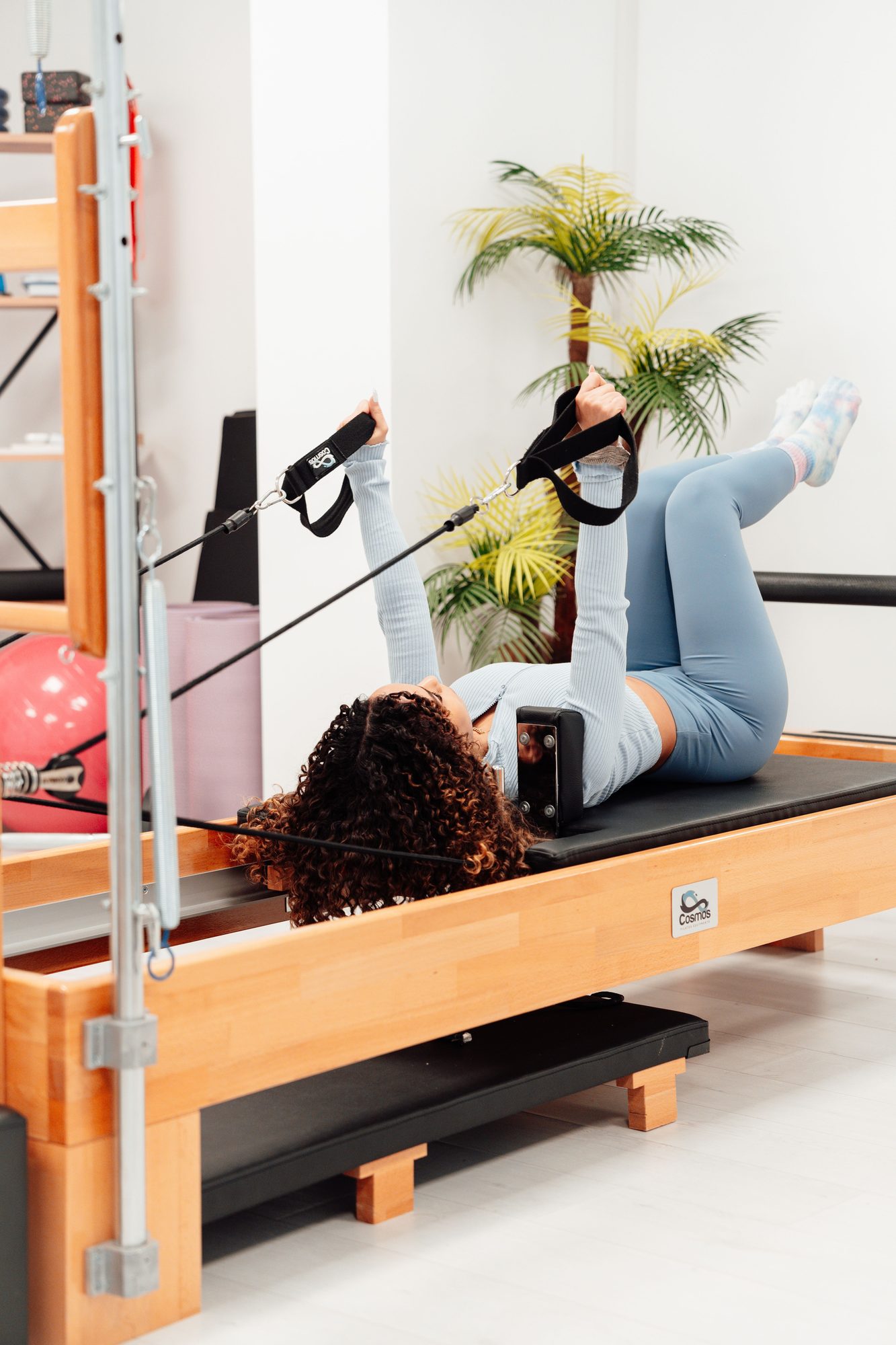
Pilates has its own dialect, and most of it is imagery rather than anatomy. That works beautifully once you know what the images point to and is completely opaque for the first month. Here is the short glossary, in the order you are likely to hear it.
Ribs down, or knit the ribs
When your arms go overhead or your legs move away from your body, the front of the rib cage tends to lift and the lower back arches off the carriage to compensate. Ribs down asks you to soften the front of the rib cage toward the hip bones so the abdominal wall stays engaged and the spine keeps its shape. It is not an instruction to slump; think of closing the space at the bottom of the sternum by about a centimeter and holding it there while everything else moves.
Neutral pelvis and imprint
Neutral means the two hip bones and the pubic bone sit level, with the natural curve of the lower back preserved; you should be able to slide a hand into a small gap. Imprint means gently tilting the pelvis so the lower back flattens toward the mat, which is used when the legs are working away from the body and you need more support. Both are correct in their own context. If you are unsure which one you are in, put a hand on each hip bone and see whether they are level with the pubic bone.
Almost every cue in this method is asking for the same thing: stop borrowing from your lower back.
Shoulders down your back, or wide collarbones
When you pull the straps, the upper trapezius wants to do the work, and your shoulders climb toward your ears. The cue asks you to start the movement from underneath: the shoulder blades slide down and slightly together while the collarbones stay broad. A useful check is whether you can still turn your head easily. If your neck feels short, the springs are probably too heavy for the version you are doing.
Heavy legs, or drop the weight of the leg
This one sounds like nonsense and is the most useful cue in the room. It asks you to stop gripping through the hip flexors and quadriceps and to let the leg be genuinely heavy in the strap or on the footbar, so the work moves into the hamstring, the glute, and the deep abdominal wall. Most people are holding their legs up with muscles that should be resting; letting go feels like doing less and is what allows the correct muscles to switch on.
Reach long, or lengthen through the crown
Length cues are about creating space between vertebrae rather than about stretching. Imagine the top of your head moving away from your tailbone by a small amount and keeping that distance while you move. It changes how compressive an exercise feels, particularly anything that involves flexion of the spine, and it is the reason two people can perform the same repetition and only one of them finishes taller.
Press the footbar away with the whole foot
Footwork looks like a leg press and is a foot and hip alignment exercise wearing a disguise. Even pressure across the ball of the foot, the knees tracking over the second and third toes, and a controlled return without letting the carriage slam are the entire point. If your knees drift inward or the carriage arrives home with a noise, take a spring off and do fewer repetitions properly.
None of this requires memorization; it requires about six weeks of hearing the same phrases while feeling what changes when you respond to them. Once the vocabulary lands, the class stops being a translation exercise and becomes what it is meant to be, which is an hour of paying close attention to how you move.