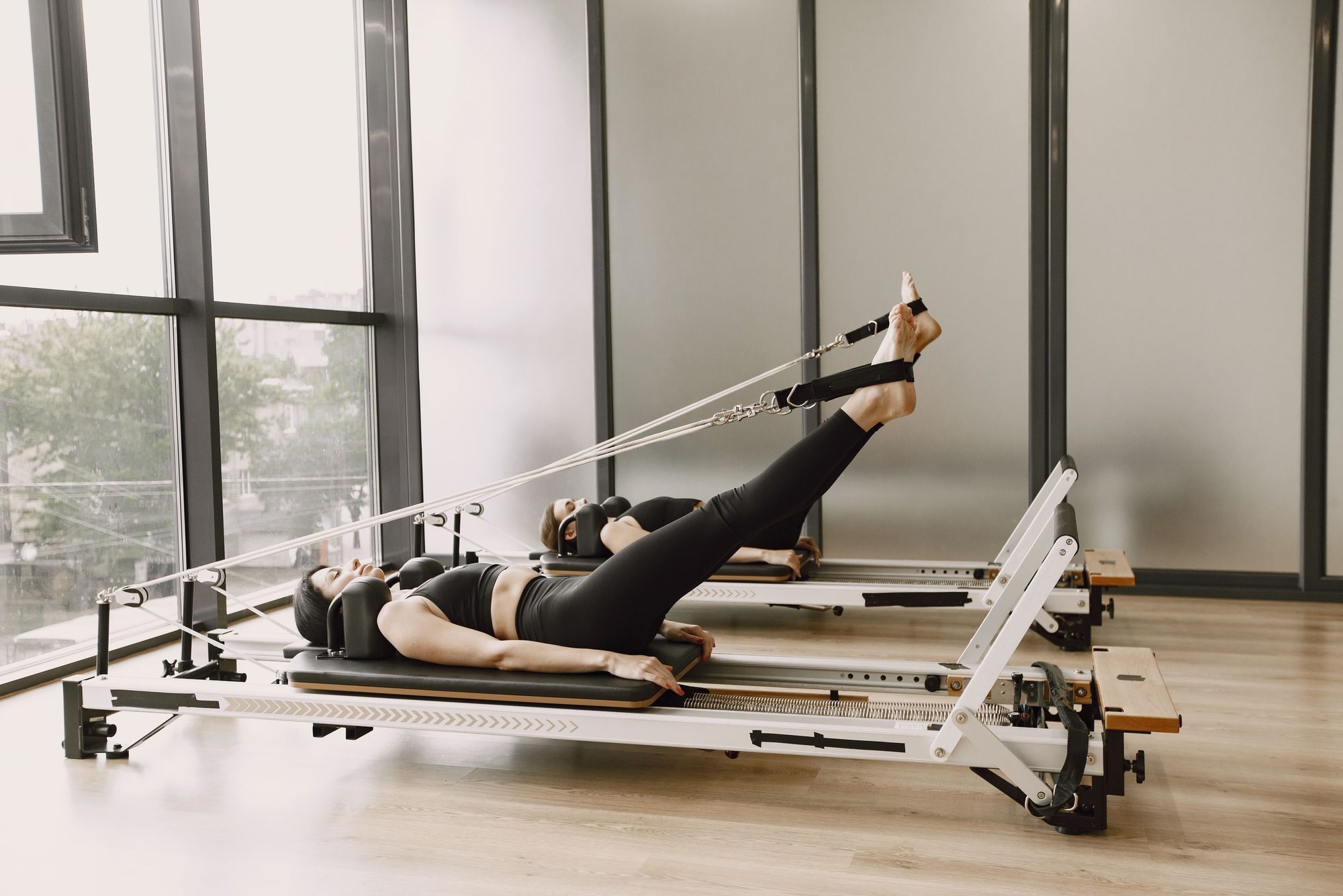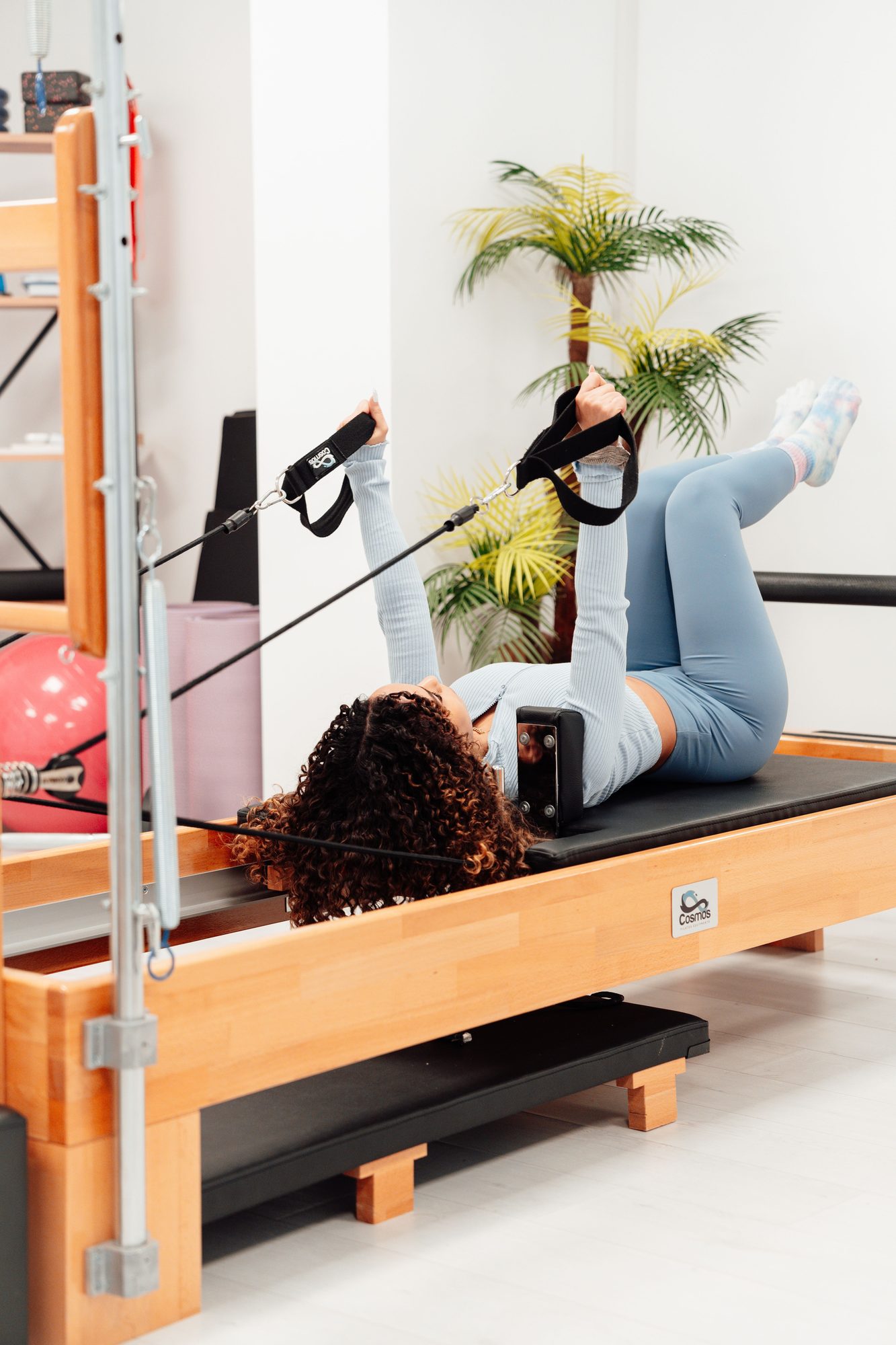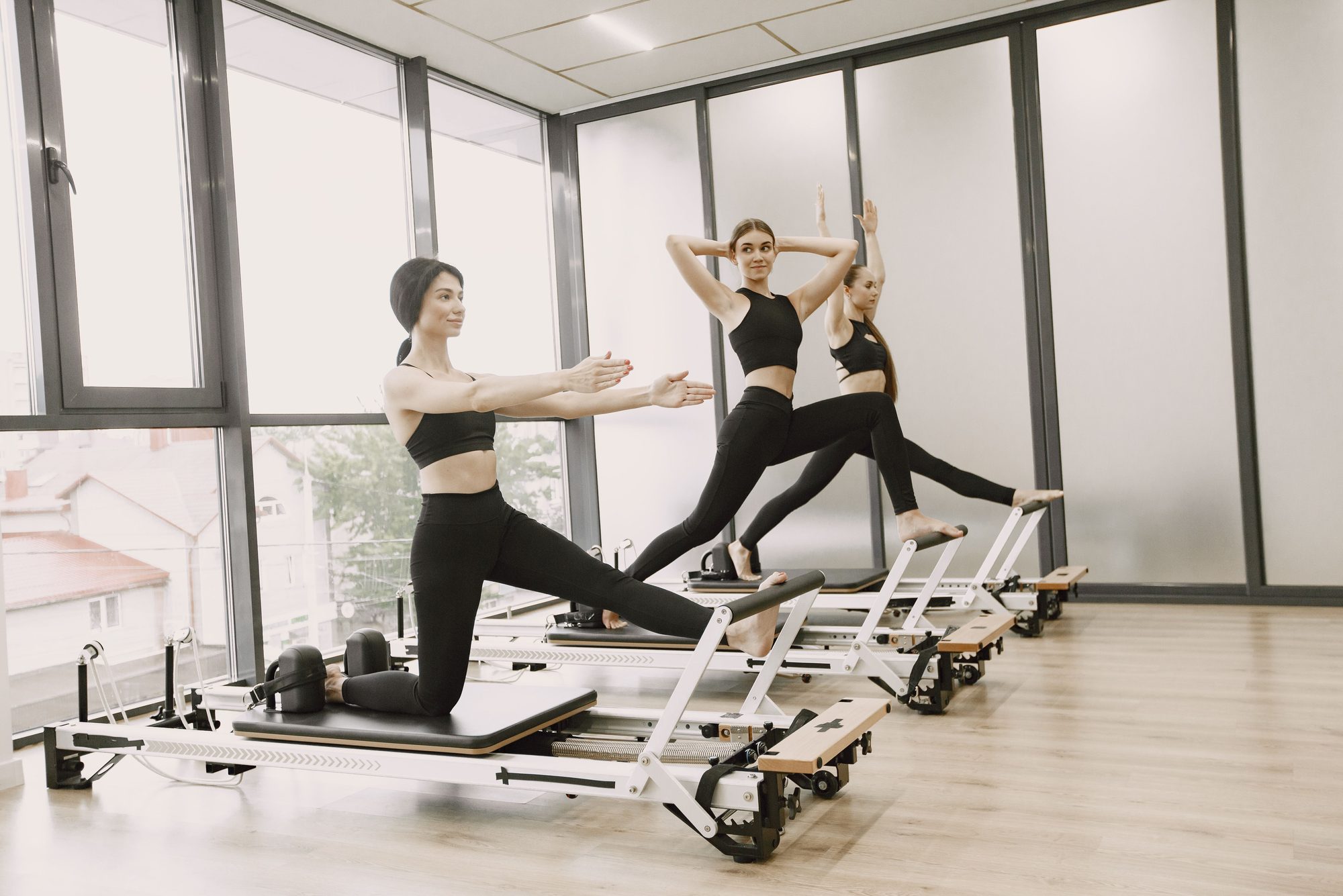
Reformer Pilates has been sold as a body transformation for so long that the honest description of it sounds underwhelming: it is a machine with a sliding carriage and adjustable springs that makes it difficult to move badly. That is the whole proposition, and it happens to be a very good one. The carriage is unstable, so every repetition asks the small stabilizing muscles to do their job before the large muscles are allowed to take over.
The springs are not weights
The most common misunderstanding is that heavier springs mean a harder class. Springs both resist and assist depending on the exercise and your position on the carriage. In footwork, a heavier setting gives you more to push against; in some arm and abdominal work, a heavier spring supports you and a light spring is what exposes the wobble. When an instructor calls for one red and one blue, they are choosing a level of difficulty for a specific movement pattern, not a strength score. Asking why a setting was chosen is a reasonable question and a good instructor will answer it.
The value is in the slow half
Almost every exercise on the reformer has a moment where the springs are pulling the carriage home and your job is to stop that from happening quickly. That resisted return is eccentric work, and it is where the method earns its reputation for long, controlled strength. It is also why the counting feels strange at first: eight repetitions performed at that speed take longer and demand more attention than twenty performed at gym tempo.
Nothing about the reformer is fast, which is why people who want fast results are the ones who quit at week three.
What it does well
Reformer work improves how you carry yourself when you are not thinking about it: hip and shoulder stability, spinal mobility in flexion, extension, and rotation, and the control of the deep abdominal wall that keeps a long day from settling into your lower back. It teaches breathing that coordinates with movement, which transfers to almost everything else you do. For people who sit for work, it addresses the exact pattern that sitting creates.
What it does not do
It is not a cardiovascular workout in any meaningful sense; your heart rate will rise in a fast class and will not stay there long enough to count. It will not build maximal strength the way progressively loaded barbell work does, and it is not a weight loss program on its own. The most sensible position is that Pilates is one of three things: walking most days, lifting something heavy twice a week, and reformer work for control and mobility. The three together are unremarkable and extremely effective.
A realistic timeline
Twice a week is the threshold where the method starts to compound. In the first two or three weeks you will be sore in places you did not know you had and you will spend most of the class translating cues. Somewhere between weeks four and eight, the sequences become familiar enough that you stop thinking about the machine and start feeling the work in the intended place. By around twelve weeks, most people notice the change first in how they stand, then in how their back feels at the end of a long day, and eventually in how clothes fit. Once a week maintains what you have; three times a week accelerates it modestly.
Private sessions are worth the money at the start
Two or three private sessions before joining group classes will teach you the setup, the spring changes, and what neutral pelvis actually feels like in your own body. It is the difference between six weeks of quietly doing an exercise wrong and six weeks of progress. If a studio will not offer an introductory private or a beginner series, that tells you something useful about the studio.
The reason the method survived a century without much marketing is that it is genuinely difficult to cheat. The carriage tells the truth: if the movement is being driven by momentum or by the wrong muscle group, it wobbles, and everyone including you can see it. Show up twice a week, keep the springs honest, and the work does what it says it will.